ServicesWater Softeners
Water Softeners in West University Place
We fit water softeners after testing the hardness of your home's water, so the system matches what is actually in your pipes. One person answers your questions, plans the installation and stays your contact for service afterward.
Who actually benefits from softening
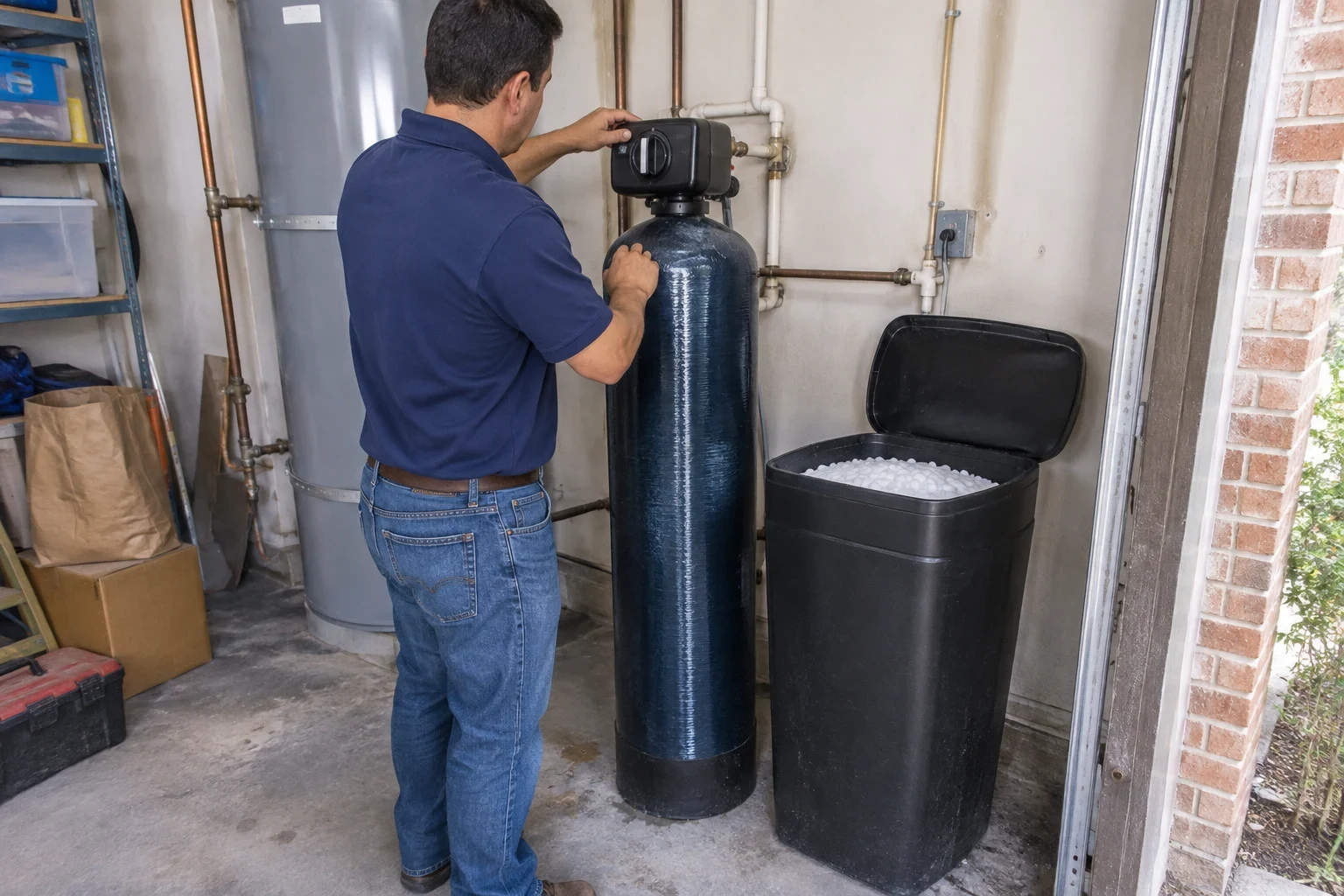
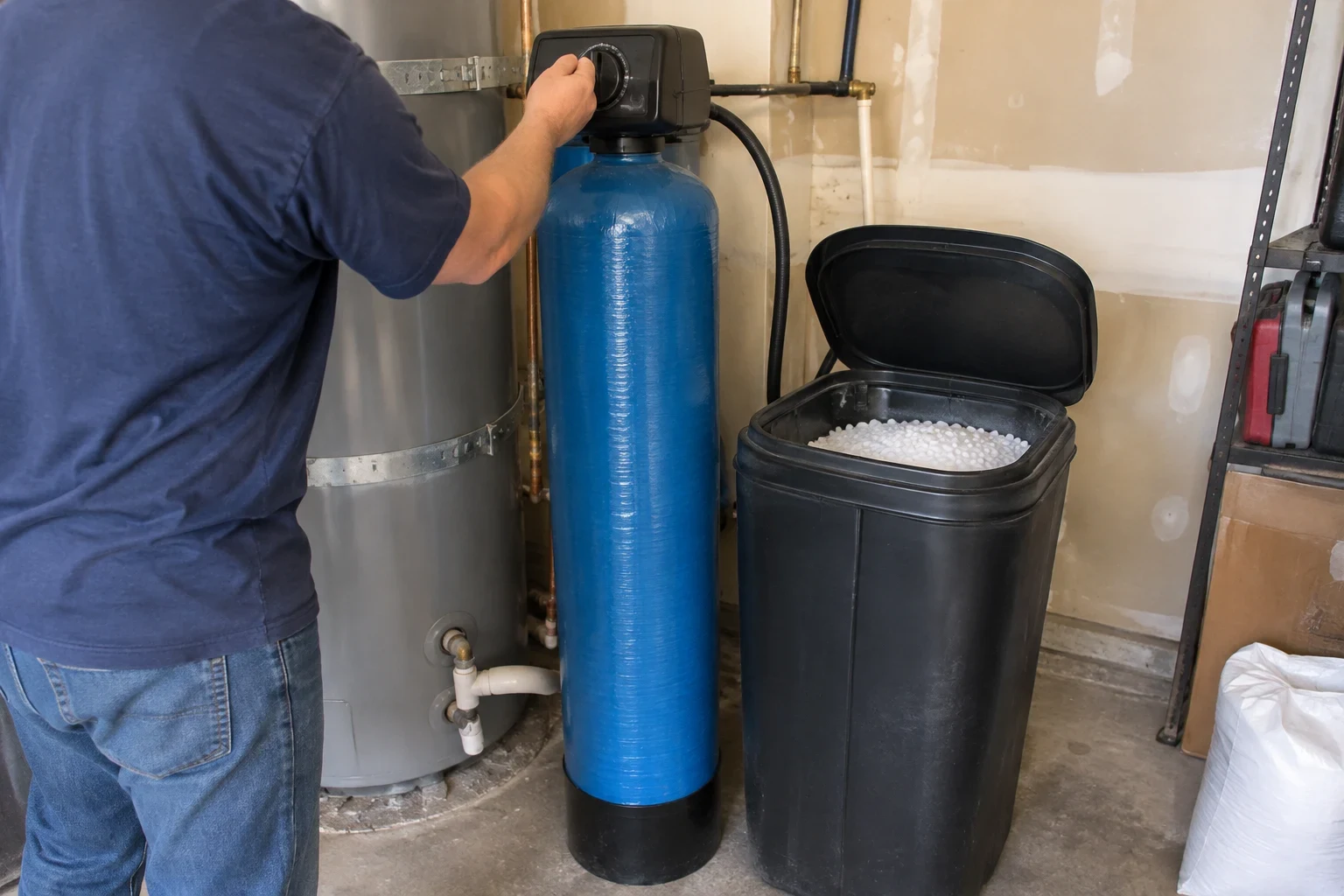
Groundwater picks up calcium and magnesium on its way to your tap. Heat or evaporation pushes those minerals back out of the water, and they collect as scale: chalky film on shower glass, grit in faucet aerators, crust on dishwasher elements and a hard layer inside the water heater. A softener removes them through ion exchange. A tank of fine resin beads captures the hardness minerals and gives off sodium or potassium instead, while a brine tank next to it periodically flushes and restores the resin.
Not every home needs one, and we would rather tell you that at the start than fit a system that changes very little. Our first step is a hardness measurement in grains per gallon. If the reading is low, you hear that plainly, and we may point you toward whole-home filtration for chlorine taste and odor as the better investment. If the number is high enough to leave scale behind, we size a softener to the people and fixtures in your home.
We hold the Certified Water Specialist credential from the Water Quality Association, and it guides how we interpret your results. You get the readings in everyday language, along with what they mean for your fixtures and appliances.
What comes with a softener installation
Hardness and iron readings first
Before any equipment is discussed, we measure grains of hardness and look for dissolved iron. Iron affects resin settings and sometimes calls for a pre-filter, so it matters to know early. You see both numbers before we make a suggestion.
Capacity matched to your household
We set grain capacity from three things: the hardness reading, the number of people at home and the bathrooms and appliances drawing water. Too small a tank regenerates constantly, and too large a tank leaves much of its resin idle.
A metered control valve
Our preference is a valve that regenerates based on the gallons your home has actually used rather than on a set calendar day. That keeps salt and rinse water tied to real demand.
Bypass, drain and clean plumbing
A bypass lets you take the softener offline while every tap in the house still runs. The drain line is fitted with a proper air gap, and the fittings are arranged neatly so future service is easy to reach.
Free installation
Installation is free with your softener. We do the setup ourselves, from the first connection to the final leak check.
Full services after the sale
Full services after the sale cover valve adjustments, resin cleaning, salt questions and routine checkups. The person you first spoke with is the one you call for all of it.
Signs your water may be hard
- White crust on fixtures
- Chalky rings around faucets, showerheads and drains that return within days of scrubbing usually mean mineral deposits.
- Spotty glassware
- Cloudy marks on glasses and dishes after a dishwasher cycle are often scale rather than a detergent issue.
- Soap that will not lather
- Hardness minerals bind with soap and leave a film on skin, hair and tile. You may notice you go through more shampoo or cleaner than seems right.
- A rumbling water heater
- Popping or rumbling sounds from the tank can signal scale collected along its floor. That layer forces the heater to burn more energy for the same hot water.
- Rough towels and faded darks
- Minerals that stay trapped in fabric can leave towels scratchy and pull color out of dark clothes sooner than expected.
How the work runs
- 1
A conversation by phone
You describe what you have been seeing and how the plumbing in your home is laid out. Then we agree on a time to test your water.
- 2
Test and recommendation
We test right at your tap, walk you through the hardness reading and give a clear recommendation, including the times a softener is not the right answer.
- 3
Installation day
We turn off the water, cover the floor and set the softener close to where the main line comes in, usually a garage or utility area. Bypass, drain and brine tank are connected, the valve is programmed, a first regeneration runs and every joint is checked for leaks. Most installations take part of a day.
- 4
Walkthrough and cleanup
Once the system is running, we go over filling the salt, switching the bypass and reading the valve display, so you are comfortable with all of it. We carry out the packaging and any old fittings when we go.
- 5
Ongoing care
Any question that comes up later goes to the same person, who already knows your water and the system in your home.
What moves the price of a softener
We hold off on a number until your water has been tested and we have seen where the system will sit. A handful of practical details set the price. We go through each one with you as part of the estimate, by phone or at your home.
- Hardness level and how many people live there
- Water with more minerals, used by a larger household, calls for a bigger resin tank with more grain capacity. That larger unit costs more than a compact one built for a light load.
- Where the main line enters
- An open spot near the main line, with room to work and a drain close by, keeps the job straightforward. A cramped closet or a long drain run takes more time and more material.
- Valve and salt choice
- A metered valve with more programming options costs more than a simple timer. Choosing potassium chloride over sodium chloride also changes what you spend on supplies over the years.
- Added treatment
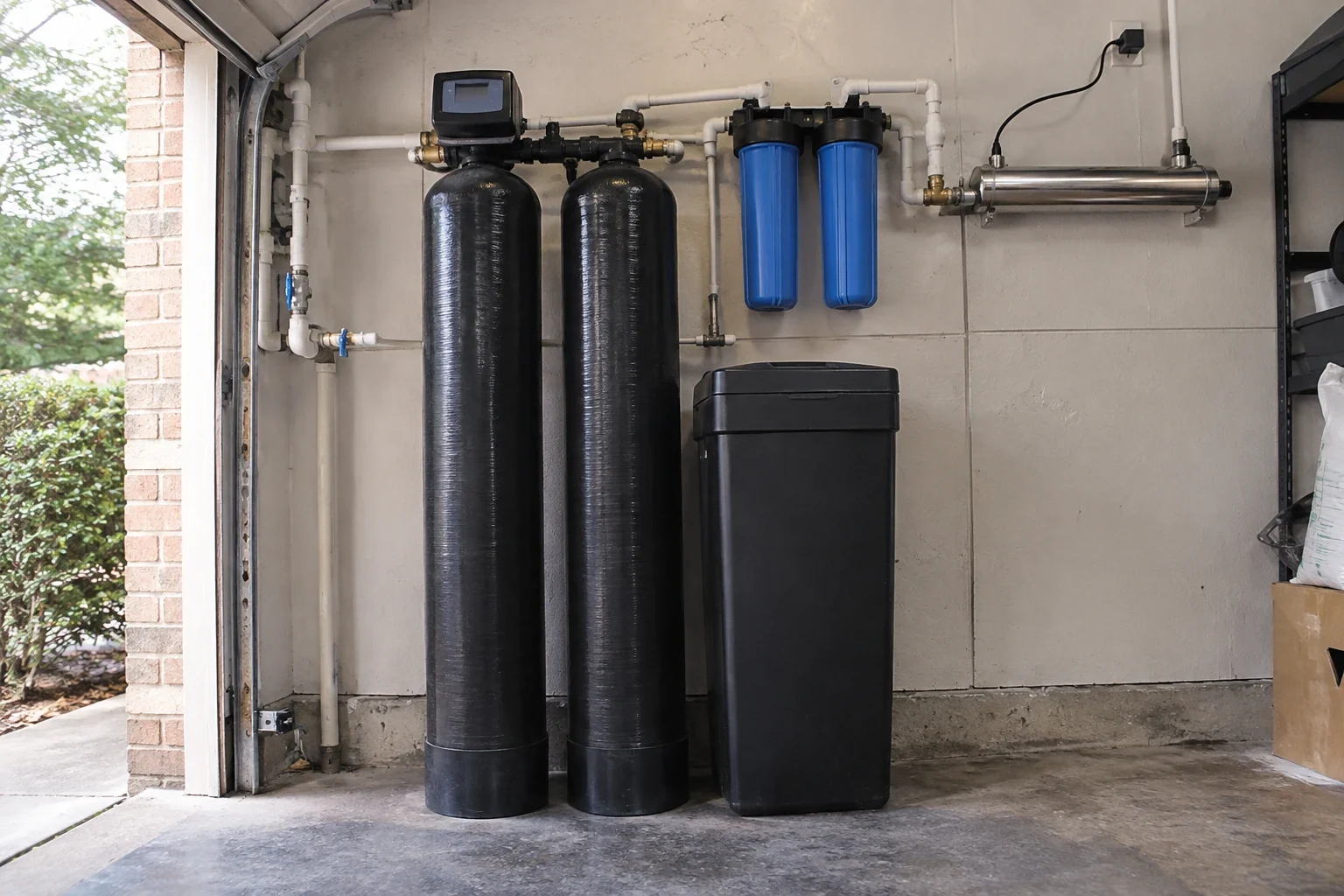
- When testing turns up iron, or you would also like chlorine taken out, a pre-filter or a combined setup with whole-home filtration widens the scope of the job.
Water softener questions
- Will softened water taste salty?
- Softened water contains a small amount of sodium, and the amount rises with how hard the water was to begin with. Most people do not notice a taste. If you want less sodium in drinking water, a reverse osmosis system at the kitchen sink removes most of it, or the softener can run on potassium chloride.
- How often will I add salt?
- That depends on hardness, household size and how the valve is set. Many homes check the brine tank once a month and top it up as needed. We show you what a healthy salt level looks like on installation day.
- Does a softener remove chlorine or other contaminants?
- No. A softener targets hardness minerals and some iron, not chlorine taste or odor. For that, a carbon-based whole-home filtration system is the usual pairing, and we can explain whether you need both after testing.
- Where in my home does the softener go?
- It goes on the main water line, close to where it enters the house, so all or most of your fixtures receive softened water. It needs a drain for the rinse water and a standard outlet for the control valve. We look at the spot during the test visit.
- What maintenance does a softener need?
- Beyond keeping salt in the tank, the resin and valve need occasional attention, such as cleaning the resin or adjusting settings if your water use changes. Because we offer full services after the sale, you call the same contact for that care.
Find out what your water really needs
A hardness test tells us whether a softener belongs in your home and what size makes sense. One conversation starts it, and the same person sees it through.