ServicesWell Water Treatment
Well Water Treatment in West University Place
A private well gives you water no utility has treated, so what comes out of the tap depends on the ground beneath your home. We test it first, then fit equipment that answers what the test found, with one person guiding you from the first call to the final rinse.
Treatment matched to your well, not a catalog
Well water changes from one property to the next. One well carries dissolved iron that turns fixtures orange, another smells of sulfur, and a third looks clear but needs disinfection. A system that suits a neighbor may do little for you, which is why we start with a lab test and design from the results.
Our recommendations come from a Certified Water Specialist with the Water Quality Association. That training shows in the order of the stages, the sizing for your flow rate and the choice of media that will hold up over years of service.
You will work with the same person throughout. They schedule the test, explain the results in plain terms, plan the installation and check back afterward, so you never have to repeat your story to someone new.
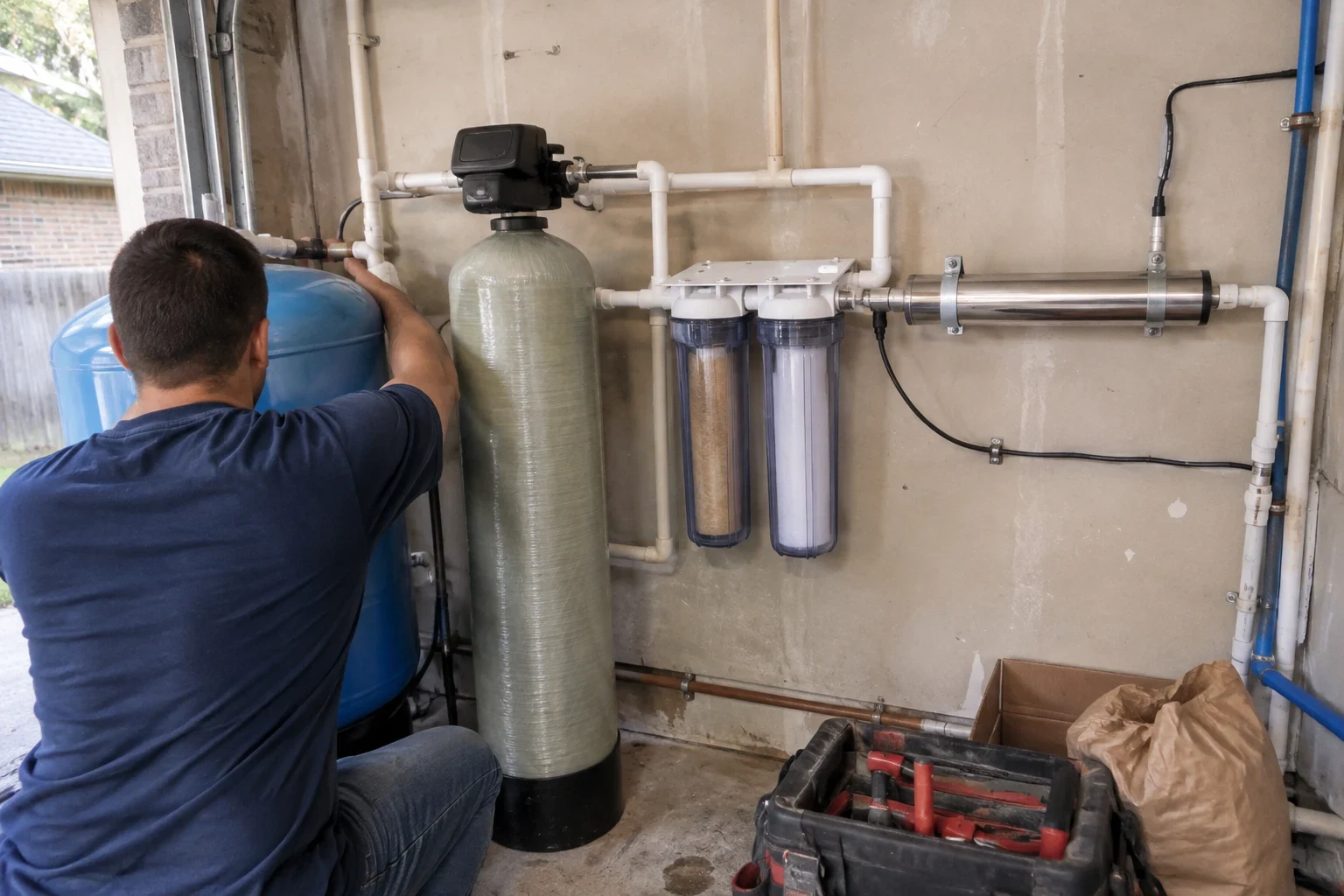
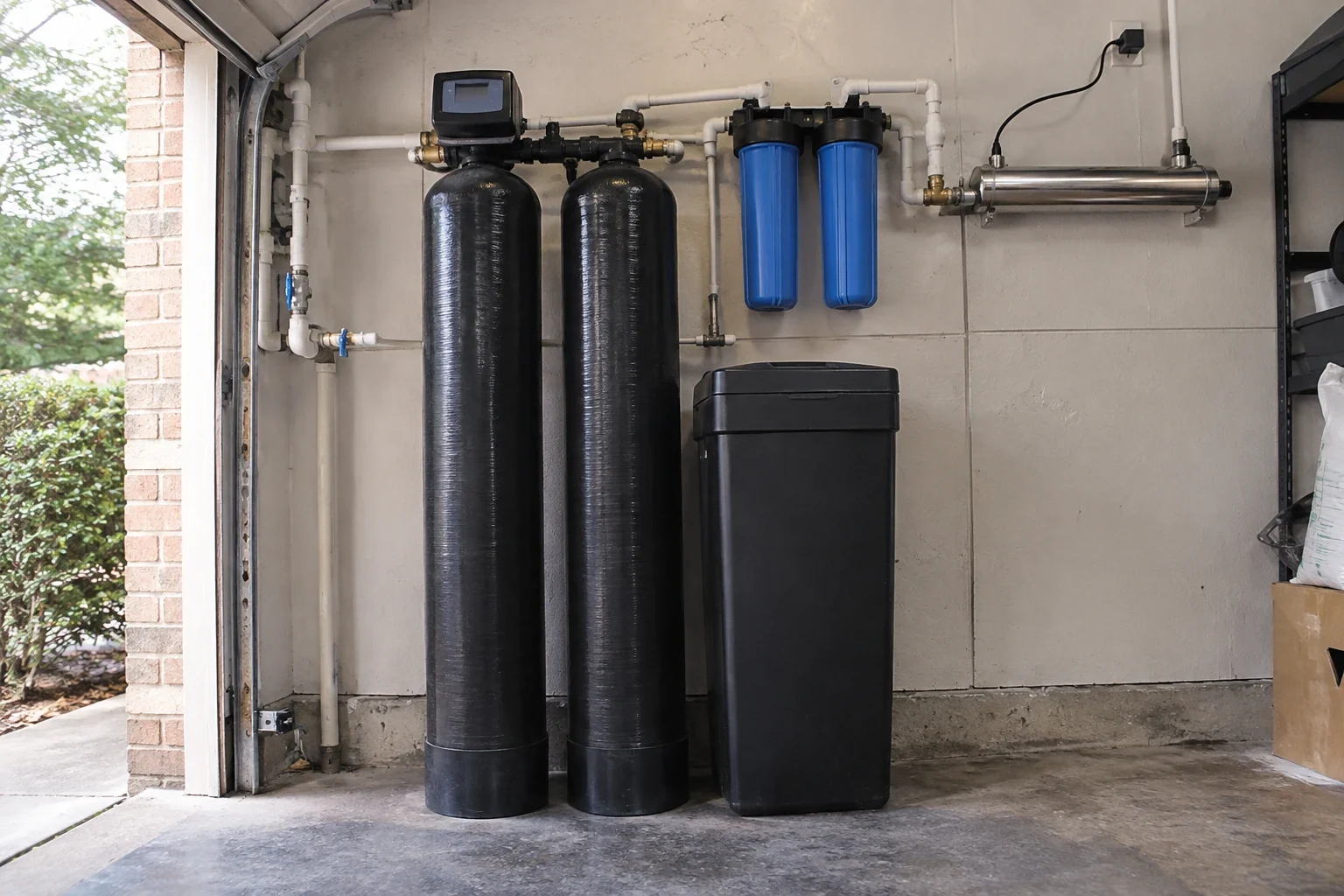
What a well treatment system can include
Laboratory water analysis
We send a sample from your well to a lab for bacteria, iron, manganese, hardness, pH and odor-causing compounds. The report becomes the blueprint for everything that follows.
Sediment prefiltration
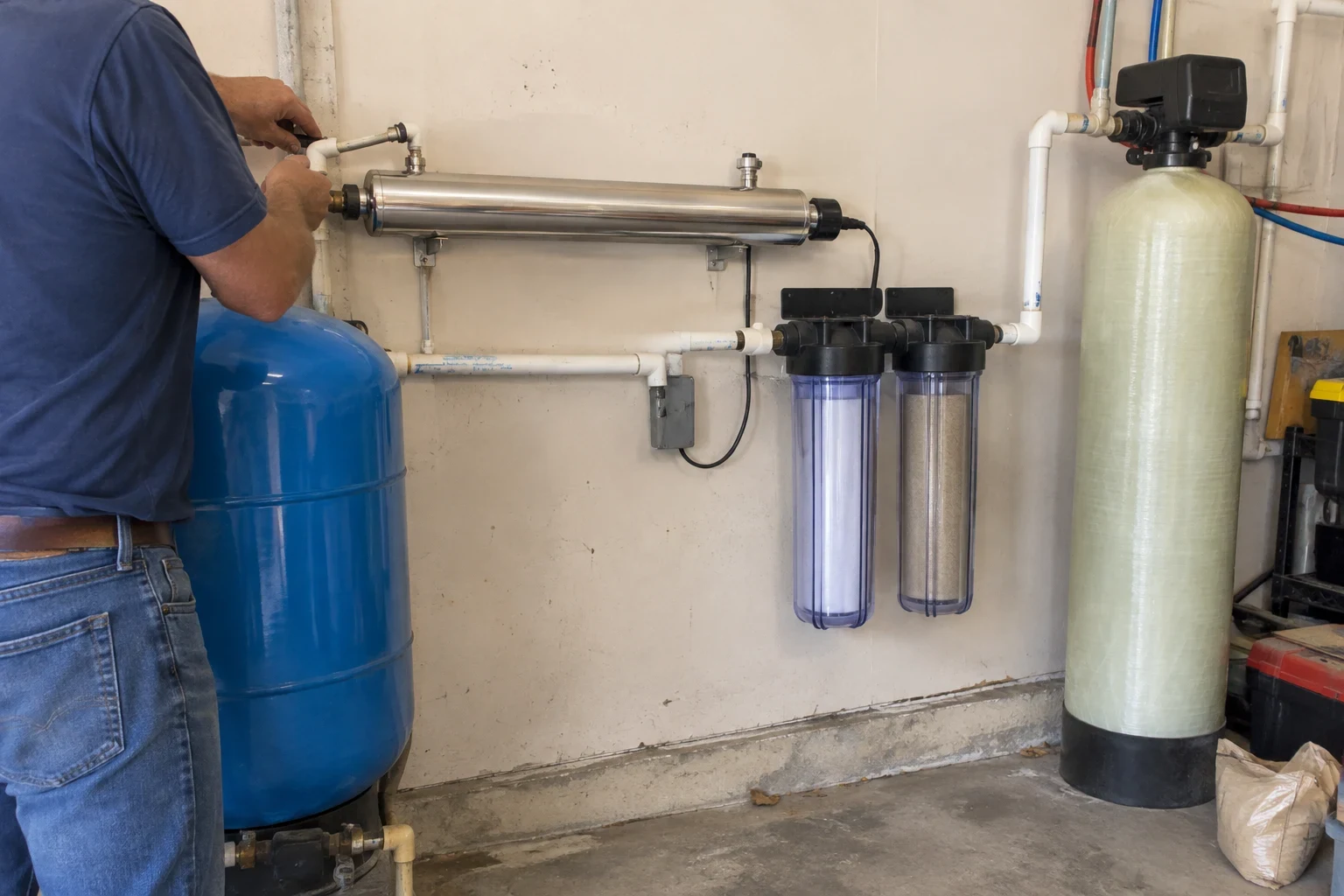
A sediment stage catches sand and grit before they reach finer media or your fixtures. It protects every stage downstream and keeps aerators and valves from clogging.
Iron, manganese and sulfur removal
Oxidizing filter media, often paired with air injection, converts dissolved iron and the rotten-egg smell of hydrogen sulfide into particles the filter can trap and backwash away. The method depends on the levels your test shows.
Ultraviolet treatment for bacteria
As water flows through a sealed stainless chamber, ultraviolet light inactivates bacteria, so nothing is added and the taste stays as it was. We mount it downstream of the filters, because clear water lets the light reach all of it.
Softening and drinking water stages
If your test shows real hardness, a softener can follow the iron filter. For drinking and cooking, a reverse osmosis unit at the kitchen sink adds a final polish where you want it most.
Signs your well water needs attention
- Orange or brown stains
- Rust-colored rings in toilets, sinks and laundry usually point to iron or manganese. Bleach tends to set the stains rather than lift them.
- A rotten-egg smell
- Hydrogen sulfide gives off a sulfur odor that is often strongest from the hot water tap. It is unpleasant and can tarnish fixtures over time.
- Cloudy or gritty water
- Sand or silt in a glass, or screens that clog quickly, suggest sediment that a filter stage should catch.
- After heavy rain or flooding
- Floodwater around a wellhead can carry bacteria into the supply. A test after a major storm tells you whether disinfection is needed.
- You have just bought a home with a well
- Unless you know when the well was last tested, start with a fresh analysis. It sets a baseline for the years ahead.
How the work unfolds
- 1
A conversation by phone
Tell us what you are seeing, smelling or tasting, and where the well and equipment area sit. Your contact sets up the sampling visit.
- 2
Sampling and lab results
We draw the sample the way the lab requires, then walk you through the report line by line, including what does not need treatment.
- 3
A written recommendation
You receive a plan listing each stage, why it is there and where it will be installed. If a simpler setup covers your needs, we say so.
- 4
Installation day
We offer free installation. Floors are protected, the equipment is plumbed and set up neatly, each stage is flushed and tested, and the area is cleaned before we leave.
- 5
Service after the sale
We provide full services after the sale, from media changes to UV lamp replacement. Your contact stays your contact.
What shapes the cost of well treatment
No two wells call for the same equipment, so we quote only after the test results are in. Your estimate is written by line, and the stages it lists are the ones your water actually needs. These are the main factors that move the total.
- What the test finds
- A well needing only sediment filtration and UV costs less than one that also needs iron and sulfur treatment. Higher contaminant levels can call for larger tanks or stronger oxidation.
- Flow rate and household use
- Equipment has to keep up with your pump and the number of bathrooms running at once. Undersized systems lose pressure and wear out early.
- Equipment space and plumbing
- Available floor space, a nearby drain for backwash and an electrical outlet for UV or air injection all affect how the system is laid out.
- Number of stages
- Adding a softener or a reverse osmosis unit at the sink increases the scope. We explain each addition so you can decide on its merits.
Questions about well water treatment
- Do I really need a lab test before buying equipment?
- Yes. Iron, sulfur, hardness and bacteria each call for different treatment, and guessing often means paying for the wrong stage. The test also tells us how large each component should be.
- Will a treatment system lower my water pressure?
- A correctly sized system should cause little noticeable change. We size every stage to your pump's flow rate and the way your household uses water, which is the main way to protect pressure.
- How much upkeep does a well system need?
- It depends on the stages. Sediment cartridges need periodic replacement, UV lamps are typically changed on a regular schedule, and backwashing filters mostly look after themselves. Your contact will lay out the schedule for your setup and handle the service.
- Should I retest after the system is installed?
- We recommend it. A follow-up test confirms the system is doing its job, and testing over time catches changes in the well, especially after heavy storms.
- My home is on city water. Is this the right service?
- Probably not. Whole-Home Filtration or Reverse Osmosis usually fits city water better. A quick call will point you to the right one.
Find out what is in your well
Tell us what you have noticed at the tap, and one person will take it from testing through installation and the service that follows. We work with well owners in West University Place and nearby areas such as Fresno and Pearland.