ServicesWater Testing
Water Testing in West University Place
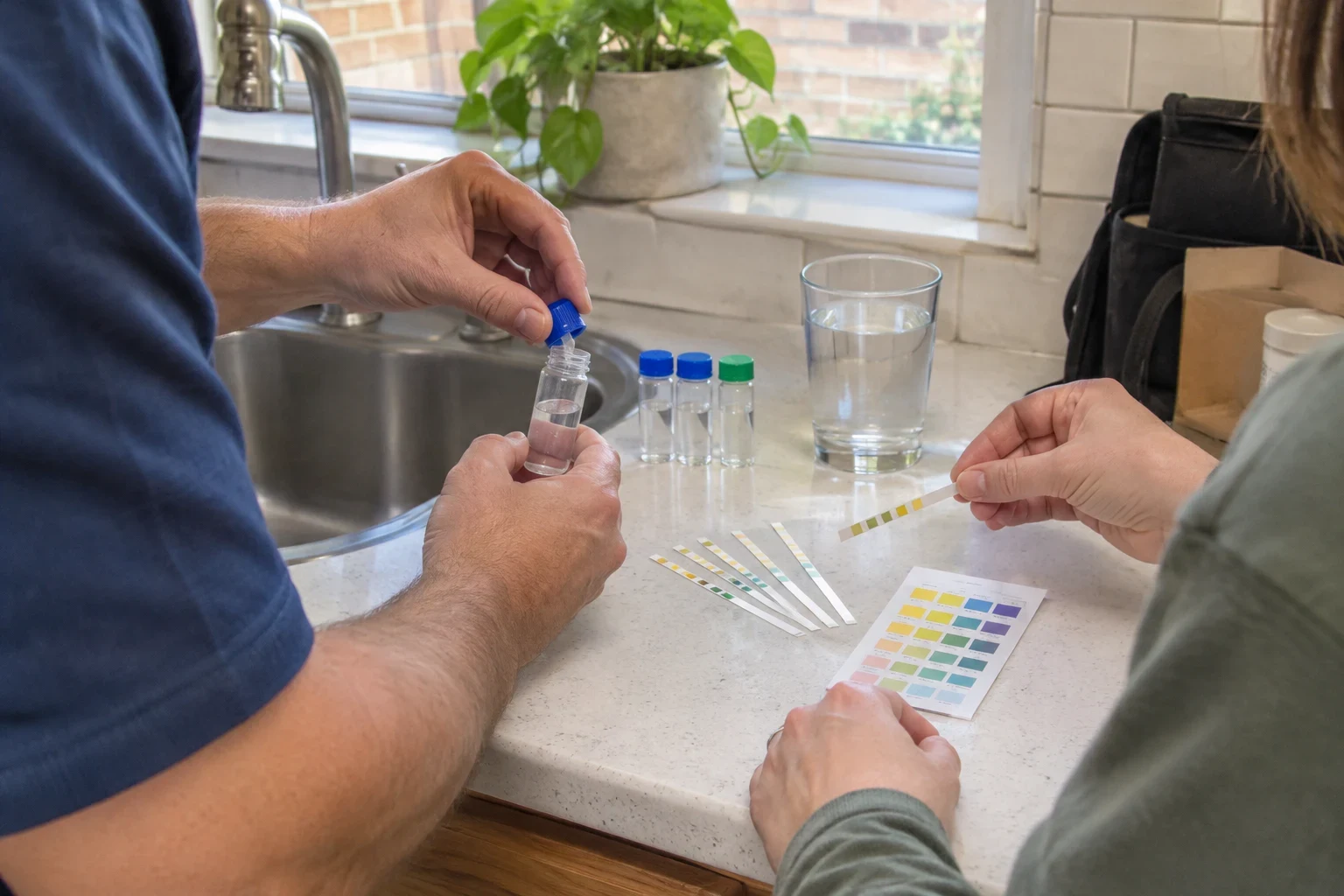
Choosing equipment goes better when you know what your tap water really contains. We sample it inside your home, explain every reading in plain language and give you a straight answer on whether treatment is worth it. One person stays with your test from the first call to the written report.
Start with facts, not a sales pitch
Most people call us because something seems off. There may be a chlorine smell in the shower, white crust on the fixtures or a metallic taste at the kitchen sink. Others simply want to know before they spend money on a system. Water testing answers that question with numbers rather than guesses.
City water in the Houston area is treated and monitored, and we say so plainly. Still, what the utility measures at the plant is not always what reaches your glass. Older pipes, a water heater full of sediment or a long run of plumbing can change it along the way. A test at your tap shows what you are actually living with.
The person who books your test is the same person who visits, reads the results with you and answers follow-up questions afterward. You never repeat your story to someone new.
What your water test covers
- Hardness and dissolved solids
- We measure hardness in grains per gallon and total dissolved solids at your kitchen tap. These two numbers decide whether a water softener makes sense for your home or would be money spent on a problem you do not have.
- Chlorine, taste and odor
- We check disinfectant levels, which explain most of the bleach-like taste and smell people notice. A high reading usually points toward carbon filtration rather than anything more elaborate.
- Iron, pH and staining clues
- Rust-colored rings, blue-green stains and low pH each tell a different story. We test for iron and pH and look closely at the fixtures where the staining appears.
- Lead and older plumbing
- If your home has older pipes or solder, we collect a first-draw sample for an outside laboratory. That gives a far more reliable lead reading than any quick strip.
- Private well screening
- For well owners, we add bacteria and a broader mineral panel sent to a lab, since no utility is checking that water for you.
- A written report you keep
- Every result is written down with the reading, what it means and whether it calls for action. Plenty of reports end with no treatment needed, and when that is the answer, we say so.
Signs it is time to test your water
A chlorine or sulfur smell
A bleach-like odor usually comes from disinfectant. A rotten-egg smell, especially from the hot side only, often traces back to the water heater. Testing tells you which one you have.
Spots, scale or crust
White film on glass shower doors and buildup around faucet aerators suggest hardness. A test tells you how hard, so any softener can be sized correctly.
Stains in sinks or tubs
Orange or brown stains suggest iron. Blue-green stains often mean the water is reacting with copper pipe.
An older home or a recent purchase
If your plumbing predates modern lead-free standards, or you have just moved in and know little about the pipes, a lead test is a sensible first step.
A new baby or a health question
Families often want a clear baseline when a newborn arrives or a doctor raises a question. A test gives you that baseline.
Before buying any system
If someone has already quoted you equipment, a test lets you check whether the recommendation matches your water.
How a testing visit runs
- 1
A conversation by phone
You tell us what you have seen, smelled or tasted and roughly how old your plumbing is. From there we pick the tests that match those clues, and we leave out the ones your situation does not call for.
- 2
The visit to your home
We arrive at the scheduled time, wear shoe covers and take samples from the kitchen tap, the well or an outdoor spigot, and the water heater when it matters. Most in-home readings are finished during the same visit.
- 3
Lab samples when warranted
Lead, bacteria and some metals are sent to an outside laboratory for accurate results. We give you a timeframe and phone you when the numbers come in.
- 4
Results, explained clearly
We go through each reading, show where it sits against drinking water standards and give you a plain recommendation: treat it, keep an eye on it or leave it alone.
- 5
Next steps only if you want them
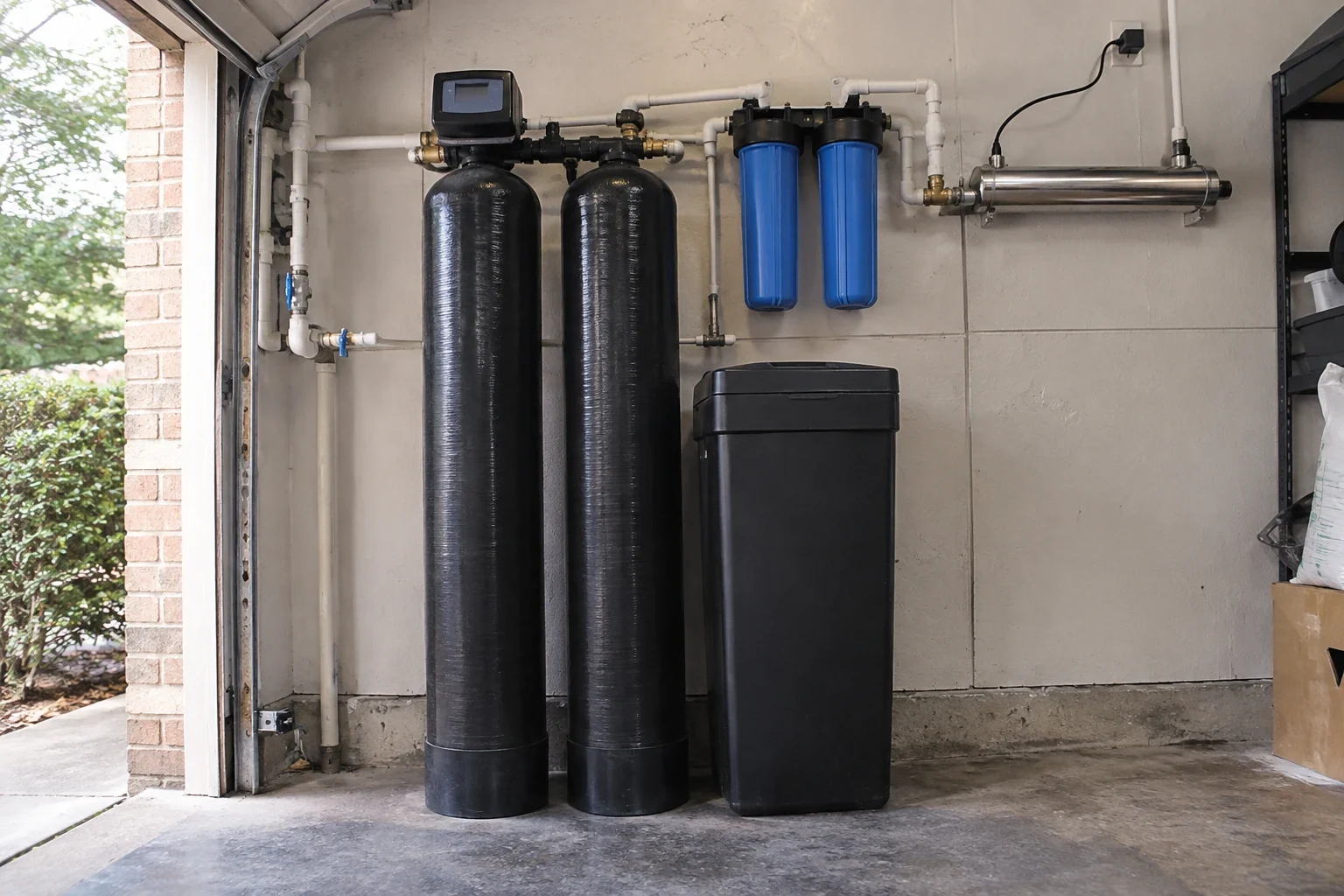
When treatment makes sense, we lay out the options, such as whole-home filtration or reverse osmosis, and explain why one suits your water better. The choice is yours to make.
What sets the price of a water test
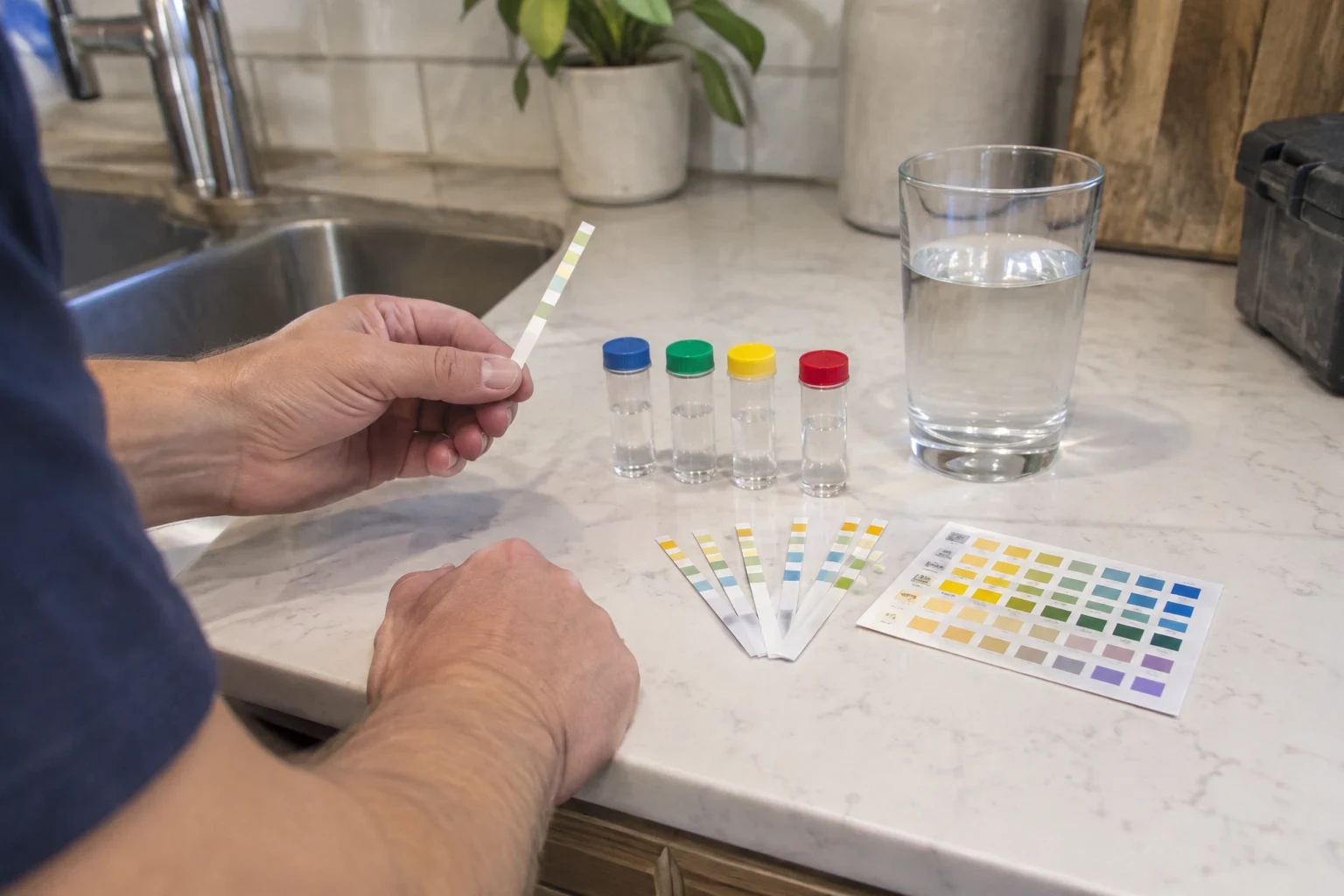
Two things drive most of the cost: how many contaminants we check and whether any samples need an outside laboratory. We go over the choices with you on the phone and give you the cost before anyone visits your home. The final bill should match what we discussed.
- Scope of the panel
- A short check for hardness and chlorine takes less time and equipment than a broader panel covering metals, pH and dissolved solids.
- Laboratory analysis
- Lead, bacteria and certain metals have to be analyzed by a lab, and that work has its own fee. We suggest it only when the age of your plumbing or your water source gives a reason to.
- City water or a private well
- A well calls for a wider screen, bacteria included, since no utility is monitoring that supply on your behalf.
- Number of sample points
- Sampling more than one tap, drawing from the water heater or returning for a follow-up sample after a plumbing repair adds time to the job.
Water testing questions
Something not covered here? (713) 510-3840
Why test if the city already tests the water?
The utility samples water as it leaves treatment and at points across the system, and that water generally meets standards. Our test focuses on what happens after it reaches your property: your pipes, fixtures and water heater. Lead, iron and unusual tastes often start in that last stretch.
Who will do my test?
Your test is handled by our Certified Water Specialist, a designation awarded by the Water Quality Association. That same person samples your water, reviews the numbers with you and takes your calls afterward.
Will you try to sell me a system afterward?
We tell you what the readings support, and sometimes the answer is that you need nothing. If you decide on equipment later, installation is free and we provide full services after the sale.
Are store-bought test strips good enough?
Strips give a ballpark sense of chlorine or hardness and little more. Lead and bacteria are beyond what they can measure with any confidence, and they offer no guidance on sizing equipment. A proper test fills in what strips leave out.
How long until I get my results?
We share in-home readings before we leave. Lab samples take longer, so we give you an expected date at the visit and call you as soon as the report comes back.
Should someone be there while you take samples?
Please plan on it. Samples come from the kitchen faucet and, in some cases, the water heater, so someone has to let us in and show us where things are. Hearing firsthand what you have tasted or seen also shapes how we interpret the readings.
Get a clear read on your water
Describe the taste, smell or staining that has you wondering, and we will point you toward the tests that fit your home. The same person you speak with first stays with you until the results are in hand.